 Woodthorpe Church of England Primary School
Safeguarding
 What to do if you are concerned about a child
If you have any concerns about a child, including in relation to any of the areas mentioned below, you can call
Derbyshire Social Care (Starting Point) on 01629-533190.
Alternatively, you may speak to your child’s teacher or one of the adults named below. All information will be treated confidentially, and we will not reveal your name to any other parent. Staff are trained to pass information on to the DSLs mentioned below, and there are clear forms and procedures within school for doing this. The DSLs will then discuss the issue and decide on what course of action to take, which may include a referral to e.g. social care. Unless we think that this will result in immediate danger to the child in question, we would also at this point liaise with and inform the parents of the child, although any referral to us will remain anonymous.
Safeguarding, Child Protection, Prevent and Early Help
The link above will take you to Derbyshire's Starting Point referral page. For Online Safety issues, including reporting to tech companies, see our E-Safety page.
Overview and who’s who.
Keeping children safe and protecting them from harm is the most important thing we do as a school. If children are not safe, they cannot flourish, form effective relationships with adults or their peers, or achieve their full potential in life. We therefore take our responsibilities in this area with the utmost seriousness.
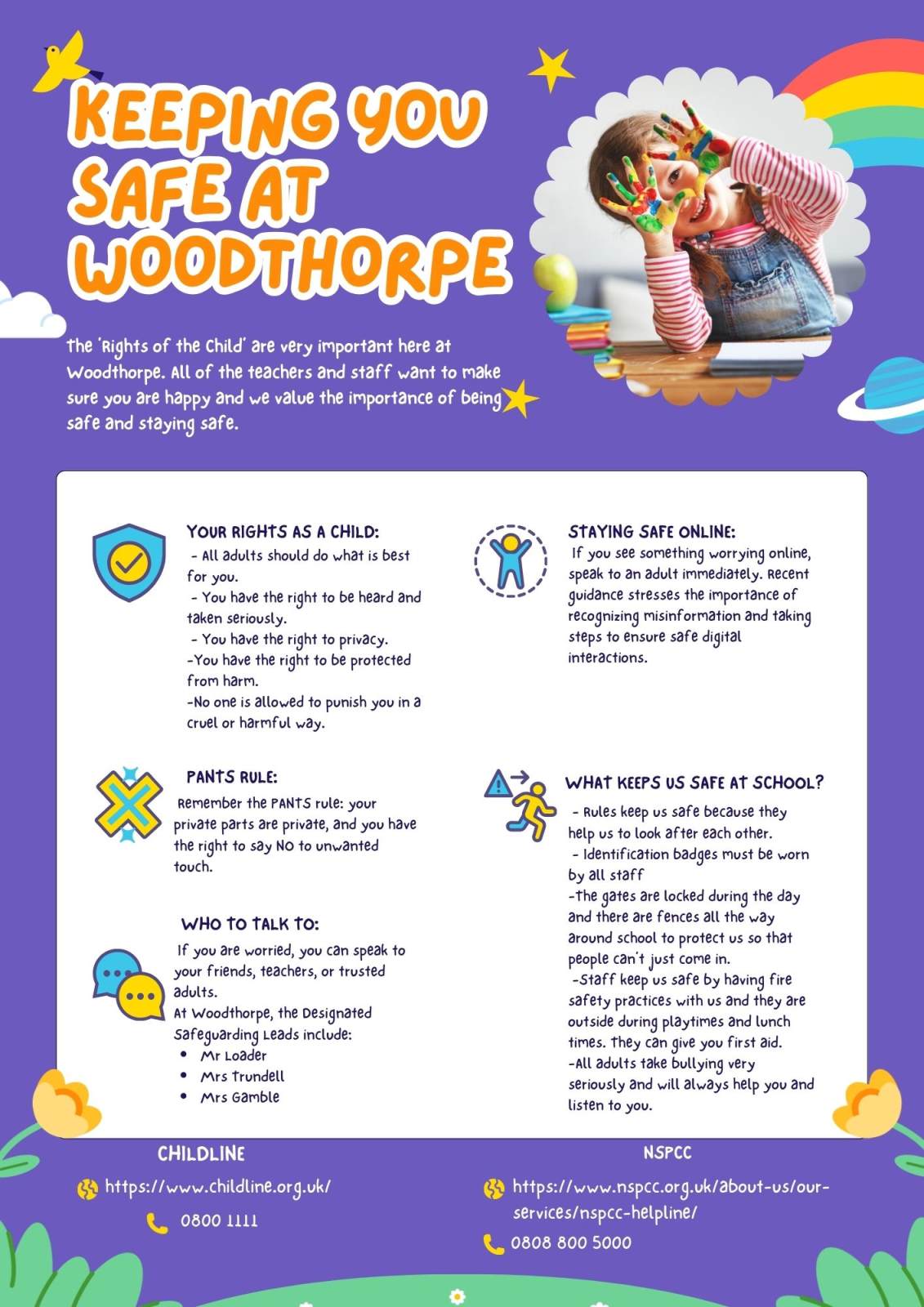
All staff and governors are trained in Child Protection and Safeguarding, and this is updated regularly. Some senior staff are trained to a higher level; the key roles in the school are:
Designated Safeguarding Lead (DSL): Matt Loader (Headteacher)
Deputy DSL: Nicky Trundell
In their absence, the following staff are also trained to this level:
Elaine Gamble (Head of School)
The Lead Governor for Safeguarding: Sue Beckett (Chair of Governors)
What is safeguarding and child protection?
Safeguarding is a term which is broader than ‘child protection’ and relates to the action taken to promote the welfare of children and protect them from harm. Safeguarding is everyone’s responsibility, and is proactive. It includes action against bullying, including cyberbullying and online safety, treating all children equally regardless of gender, ethnicity, disability, sexuality or beliefs, preventing impairment of health and development, ensuring that all children are effectively cared for, and taking action to enable all children to have the best outcomes.
Child protection relates to system-wide procedures for keeping children safe, and is reactive to situations that arise. This includes staff training and awareness, liaison with other agencies (e.g. Early Help Team, Social Care, the police), safer recruitment (including rigorous vetting and background checks on appointed staff), and protecting children from issues such as domestic violence, forced marriage, female genital mutilation, children missing from education, child sexual exploitation, racism, extremism and so on.
Specifically, child protection focuses mainly on four categories of abuse: physical, sexual, emotional and neglect. Neglect, physical and sexual abuse will also include emotional abuse, but this can be a category on its own. For definitions, see our Safeguarding and Child Protection Policy.
For more information see our Safeguarding policy here
Staff Training
After appropriate background checks (e.g. enhanced DBS), all staff receive induction training in safeguarding. Staff must read a variety of documents, and leaders ensure that they have understood the information and a document is signed to confirm this. All adults who work in school have their details kept on the ‘Single Central Record’, which is managed by the School Business Manager, Claire Millington, and checked by the Headteacher and shared with governors. Staff receive training around being vigilant to forms of harm and abuse, and understand which procedures to follow if they suspect that this may have happened. All records are kept securely by the DSL, and the school uses an online system for this called CPOMS (Child Protection Online Management System).
The DSL completes regular safeguarding audits, and shares the outcomes with governors and the Trust, taking actions for any areas identified. There are many school policies for safeguarding, some of which are included in the policies section of this website.
Site Security
All staff and visiting adults sign in to school and wear identification tags. The outer doors and gates are locked, and a fob system is in operation for access to the building. The site supervisor conducts perimeter checks every morning, and ensures that the site is secure. The school has risk assessed the premises.
The Prevent Duty
The aim of the Prevent Duty is to reduce the threat to the UK from terrorism by preventing people of all ages from being drawn into terrorist activity. As part of a school’s wider safeguarding duty, schools are responsible for protecting children from the risk of radicalisation. The Prevent duty requires school staff to be able to identify children who are vulnerable to radicalisation and to know how to respond to this.
All our staff and LTC members (governors) have completed training on the Prevent Duty and how to recognise and report signs of extremism and radicalisation.
DSLs have access to the Counter Terrorism Local Profile and are mindful of the information within it (this is not in the public domain). This ensures that we:
keep up to date on current priorities
have access to policing teams badge numbers and direct phone numbers, including the Regional Engagement Officer
have awareness of any community tensions
potentially seek additional training, such as ideology training
filter information as necessary to staff
Mr Loader is the Prevent Lead in school, and Sue Beckett is the governor with responsibility in this area. Both are trained to a higher level in the Prevent Duty.
Early Help
Our Sendco, and Teaching Assistants, run social and emotional interventions for individuals and groups. Any child who is experiencing difficulties at any point in their lives, within or beyond school, can speak to the Sendco, their teacher or any other trusted adult in school.
We also provide Early Help support for families using Positive for Young People (P4YP). This is bought in by the school, and we triage families and pupils for support with our dedicated Early Help Officer, Rebecca Scott. Rebecca visits school for a full day every Monday, and liaises with children and families, giving a full range of support and signposting.
For more information on P4YP, click here.
Please also see the E-Safety section of our website